I took the entrance exam for the Japan Advanced Institute of Science and Technology (JAIST). To learn more about the university, please visit the website below. I’m writing about the day of the exam while it’s still fresh in my memory. I’m publishing this article after both exam dates, October 17 and 18, so that it won’t give other applicants an advantage.

Getting Ready for the Interview
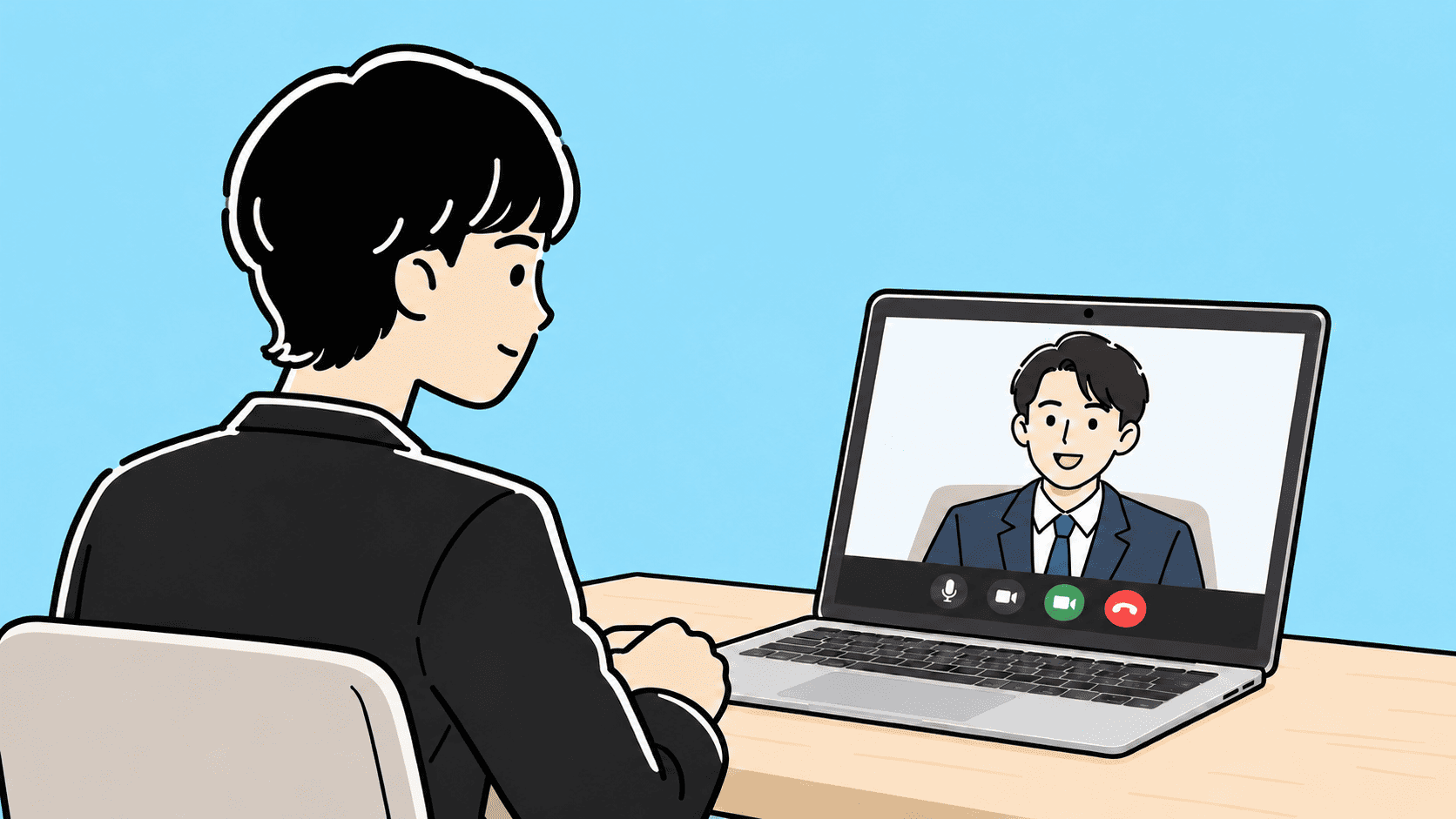
I had received an email in advance telling me that my interview was scheduled for October 17, 2026, from 10:30 to 11:00 a.m. The interview was held on Zoom. The instructions for the day said to join the designated Zoom room at 10:10, twenty minutes before the interview. To give myself some extra time, I joined at 10:05.
At 10:10, a university staff member, who was not one of the interviewers, joined the room and started speaking to me. They checked whether I could hear them and whether I had everything I needed for the interview, such as paper and a pen.
Then, to check that no one else was hiding in the room where I would be taking the interview, they asked me to show them a 360-degree view using my computer’s webcam. I picked up my laptop and showed them the whole room. With my rice cooker and washing machine in view, it was a rather revealing glimpse of everyday life at home. Still, they seemed satisfied that no one else was there, and that check was over.
Next, I was asked to share my slides, so I shared my entire screen with the slides displayed in full-screen mode. I had prepared them in advance because I was supposed to give a seven-minute presentation about my research goals during the interview.
The staff member seemed particularly concerned about whether I was sharing my entire screen. I assume this was to prevent me from sharing only the slide application while keeping my presentation script open elsewhere on the screen. However, they apparently weren’t sure how to check my sharing settings. They called over another staff member and asked, “Is this sharing the entire screen?”
I closed the slideshow, revealing my Chrome tabs and address bar. Once they could see that my entire screen was being shared, they accepted it.
At that point, I began to wonder whether I might be the first person being interviewed that day. I wasn’t certain, but the staff didn’t seem completely familiar with the procedure.
The checks finished at 10:20, and I was told to wait until 10:30. For those ten minutes, the staff member kept their microphone off and camera on, while I kept both mine on. During the wait, I went over my presentation about my research goals one last time.
At 10:30, the staff member turned on their microphone and said, “It’s time, so I’ll now connect you to the interview room.” The video changed, and the interview began.
面接
The interview started right on schedule at 10:30. There were three male interviewers. The one in the middle was the professor whose lab I was interested in joining. I recognized him immediately because I had seen his photo in the lab information beforehand. I had never seen the other two before.
For the next thirty minutes, they asked one question after another, and I did my best to keep answering. Roughly speaking, the professor in the middle asked questions for fifteen minutes, the professor on the left from my side for five minutes, and the professor on the right for ten minutes.
The professor in the middle went first. His questions included:
- Which courses would you like to take, and how do they relate to your research?
- What is the difference between a class and an object?
- Do you have any programming experience?
- Can you give an example of a sorting algorithm, such as bubble sort, and explain its time complexity?
He asked various other questions, but most were about my research plan.
The professor on the left went next. He asked something along these lines:
- What is a degree in information science?
I think that was the question, but my mind was full of question marks, so I don’t even remember the exact wording. I seem to recall saying something like, “It is a degree awarded to someone whose research contributes to academia and industry and is recognized for doing so.” But I didn’t clearly understand what he was getting at, so my answer ended up being vague as well. Before I had really figured it out, it was the next interviewer’s turn.
The professor on the right asked questions such as:
- Regarding your research plan, this field has been studied for a long time. What year was the oldest paper you read published, and approximately how many papers have you read in this field? Is that enough?
- Regarding your research plan, could you write down the formula for recall on a piece of paper and show it to us?
He kept asking detailed questions about my research plan, and there were quite a few moments when I struggled to respond. It made me realize that I hadn’t been thorough enough in my preparation. I was reminded of just how skilled they were as researchers. Even in such a short interview, they identified the core of my proposed research and focused their questions on it.
The thirty minutes flew by as I fumbled my way through the questions. At 10:58, the interviewer in the middle said, “That concludes the interview. Please leave the meeting.” I thanked them and left.
Final Thoughts
There were several questions I couldn’t answer clearly, so I didn’t feel particularly good after the interview. Apart from the question from the interviewer on the left, most of the questions made me think, “Yes, of course they would ask that.” I understood what the other interviewers were getting at.
JAIST’s entrance exam consists only of an essay and an interview, so once the interview was over, the whole exam was over.
The results will be announced on October 30. If I get in, I’ll update this article. If I don’t, I won’t. You can take the hint.